








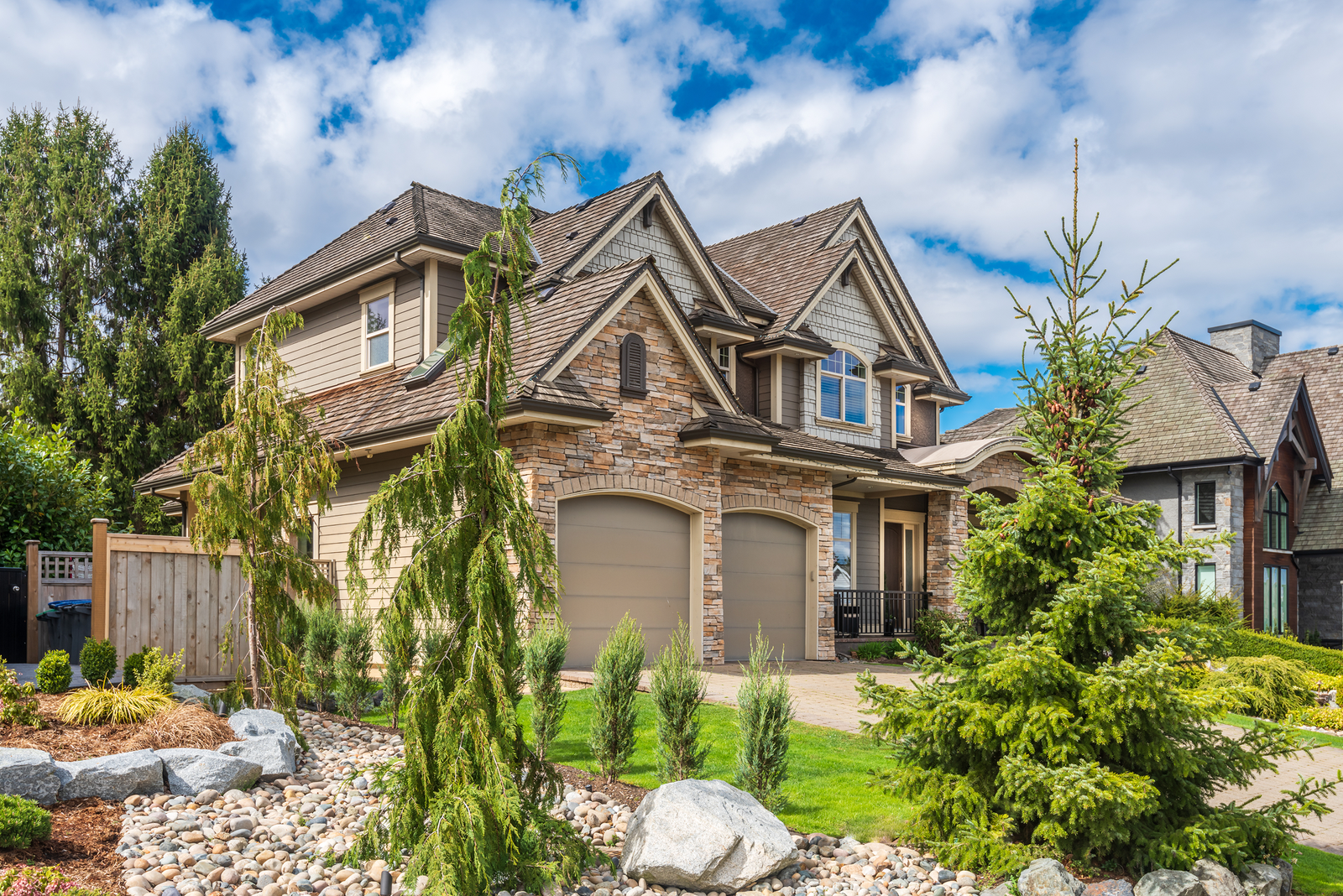
The furnace is serviced and the windows are shut. The rest of fall's homework happens at the kitchen table: five checks on paper that protect the value of your home through winter and beyond.
By Andrew Howell, REALTOR®, RE/MAX Sarnia Realty Inc.
Most of what we do to protect a home happens with a ladder or a caulking gun. Some of the most valuable protection happens with a folder, a phone call, and an hour at the kitchen table. Insurance, rebates, assessments, and records do not show from the street, but they decide what a winter storm costs you, what an upgrade really costs, what you pay in property tax, and how confidently your home sells when the time comes. Fall is the natural moment for this work. Rebate programs are winding down for the year, and the season of burst pipes and flooded basements is still ahead.
None of the moves below calls for a contractor or a financial advisor, and most take an evening or less. Each earns its place because it protects money you have already put into your home.
1. Read your home insurance policy before the freeze
Most homeowners have not read their policy since the day they bought the house, and the gaps usually sit exactly where winter does its damage. A standard policy generally covers sudden water damage from inside the home, such as a burst pipe or a failed washing machine hose. Sewer backup, overland flooding, and groundwater seeping through the foundation are typically separate, optional coverages, and without them a flooded basement can land entirely on you.
The stakes keep rising. Severe weather caused more than $2.4 billion in insured damage across Canada in 2025, including the late-March ice storm in Ontario and Quebec, and the Insurance Bureau of Canada reports that insured losses from 2016 to 2025 were nearly triple those of the decade before. Call your insurer and ask three questions: Am I covered for sewer backup? Am I covered for overland water? Is my dwelling limit based on today's cost to rebuild? That last one matters more than most people realize. Your coverage should reflect what it would cost to rebuild the house, not what it would sell for, and Statistics Canada reports that residential construction costs rose another 2.3 percent over the past year. A limit set years ago may no longer rebuild your home.
2. Claim the energy rebates before they close
If an energy upgrade has been on your list, this is the fall to do it. Ontario's Home Renovation Savings Program, delivered by Save on Energy and Enbridge Gas with support from the provincial government, offers rebates of up to $7,700 for insulation, $100 per replaced window or door opening, $1,250 for attic insulation on its own, and up to $7,500 for a cold-climate air source heat pump. It covers homes heated by electricity, natural gas, oil, propane, or wood. The program was first set to end in November 2025, was extended through November 2026, and can close at any time, so the window is narrowing.
Order matters. The larger bundled rebates require a home energy assessment, itself eligible for a $600 rebate, before any work begins, so book the assessor first and the contractor second. Sarnia homeowners have a second program to know about as well. The City of Sarnia's Basement Flooding Grant Program provides up to $5,600 per property toward a backwater valve and toward disconnecting foundation drains and installing a sump pit and pump, with approval required before construction starts. Upgrades like these lower your bills for as long as you own the home and give a future buyer something concrete to see in the listing.
3. Check the details behind your property assessment
Your property tax bill rests on a number most homeowners never look at. In Ontario, the Municipal Property Assessment Corporation (MPAC) assesses every property, and because the province postponed the scheduled reassessment, 2026 property taxes are still calculated on values as of January 1, 2016. That makes the details MPAC has on file more important, not less. An assessment changes only when something about the property changes, such as an addition, a finished basement, or a correction to the record.
Sign in to MPAC's AboutMyProperty portal and check what it holds: square footage, lot size, number of bathrooms, finished space, and the year built. Errors happen, and they cost you on every tax bill until someone catches them. If something is wrong, you can file a Request for Reconsideration online and free of charge, by the deadline printed on your Property Assessment Notice. Keep the reverse in mind too. When you finish a basement or build an addition, MPAC will update the assessment, so budget for the tax change along with the renovation.
4. Build a home file, and keep a copy outside the house
Every home collects paperwork worth keeping: receipts for the roof and the furnace, building permits, warranties, appliance manuals, and the inspection report from the day you bought it. Most of it ends up in a kitchen drawer or the recycling bin. Gather it into one file, paper or digital, and add to it every time you spend real money on the house.
The file pays you back twice. The first time is after a loss. The Insurance Bureau of Canada recommends a home inventory with photos, descriptions, purchase prices, and serial numbers, stored somewhere away from the house and updated each time you renew your policy. A slow video walk-through of every room, with closets and drawers open, takes twenty minutes and makes a claim far easier to prove. The second time is at sale. Buyers and their inspectors will ask how old the roof is, when the furnace was replaced, and whether the basement was finished with a permit. A seller who can hand over the receipts answers those questions with confidence, and a confident answer protects the price.
5. Know what your home is worth today
Many homeowners carry a number in their heads from the last time they checked, and for a lot of people that was the peak of 2022. The local market has moved since then. In August 2026, the Sarnia-Lambton Association of REALTORS® reported an MLS® Home Price Index benchmark of $489,900, down 2.6 percent from a year earlier, while the average sale price rose 2.4 percent to $535,819. New listings reached 317, the most for any August in more than 35 years, and months of inventory climbed to 5.1.
Those figures describe the region, not your house. What your own home is worth depends on its condition, its location, and what it offers against the homes for sale around it. That number shapes more than a sale. It informs how you plan for a mortgage renewal, whether a renovation will pay for itself or a move makes more sense, and how much equity you have to work with. It is also a different number from the rebuild cost your insurance should cover, and knowing both keeps every one of those decisions grounded.
None of this is work anyone sees. It will not change how the house looks from the street, and it will not make the listing photos. But it decides whether a February flood is a claim or a crisis, whether this fall's upgrade costs full price or less, whether you pay tax on the right number, and whether you meet the market with the facts in hand. An evening or two this month, and your home is as well protected on paper as it is in fact.
If you would like to know what your home is worth in today's market, or which improvements would matter most before a future sale, I would be glad to walk your property with you. Reach out anytime by phone at (519) 402-1277 or by email at AndrewHowell.Realtor@gmail.com.
Andrew Howell is a REALTOR® with RE/MAX Sarnia Realty Inc. A lifelong Sarnia resident, he represents buyers and sellers across Sarnia, Bright's Grove, Point Edward, Camlachie, and Corunna.
Sources: Insurance Bureau of Canada (Severe Weather-Related Insured Losses in Canada Exceed $2.4 Billion in 2025; Property Inventory); RBC Insurance (Water Damage: What Am I Covered For?); Statistics Canada (Building Construction Price Indexes, Second Quarter 2026); Save on Energy and Enbridge Gas (Home Renovation Savings Program); City of Sarnia (Basement Flooding Grant Program); Municipal Property Assessment Corporation (The Assessment Cycle; Request for Reconsideration); Sarnia-Lambton Association of REALTORS® and Canadian Real Estate Association (August 2026 market statistics).